

Beyond Four Walls: How Community Living Redefines Urban Life
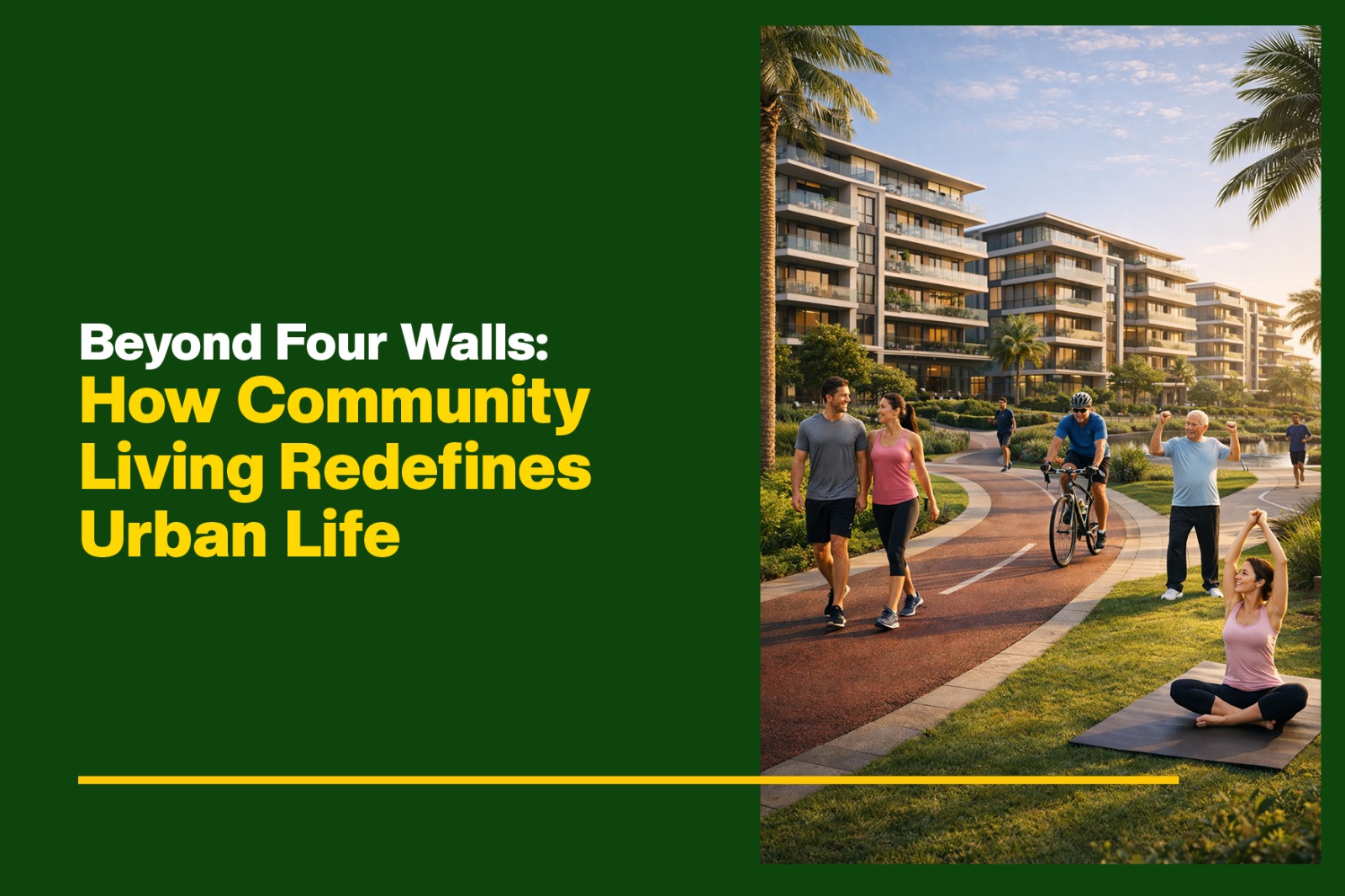
Urban lifestyle in Kerala has changed in ways that are easy to notice but harder to articulate. Cities like Kochi, Trivandrum, Calicut, and Thrissur are growing faster, buildings are getting taller, and daily routines are becoming more time-bound. While homes today offer better layouts and modern facilities, many city residents still experience a sense of isolation that did not exist a generation ago.
The daily errands, busy routines, and crowded cities create a sense of isolation and emotional distance. The shared spaces highlight the importance of community life in urban society. Community is a social asset instead of an add-on. Through shared spaces and interactions with neighbors, this creates a sense of belonging and the significance of co-living in a society.
The Quiet Isolation of Urban Life
Although city life has all the possibilities of life and access to all the necessaries, it creates a sense of isolation and loneliness among families and individuals. Most families in cities are nuclear families with busy routines and less interaction with neighbors. Urbanites always prefer to focus on screen-based routines in their daily life; hence, it creates the major silent urban problem, emotional disconnection. In these crowded cities people are emotionally distant. The common places like elevators, parking spaces, and corridors become less interactive zones in day-to-day life.
Since work schedules influence day-to-day life, commuting, deadlines, and screen time leave out a little space for interaction with others in the community. Working professionals are always engaged in their work and don’t even get time to interact with others. Likewise, the households with dual income didn’t even get time to interact with their family members. The single residents always prefer to remain within their household, yet they also long for communal life. Isolation doesn’t look like loneliness, but it creates reluctance to reach out and interact. Modern city living is comfortable and private, but it decreases human interaction.
Shared Spaces as Social Anchors
Shared spaces in urban communities serve as a tool that quietly enables connection. Lobbies, walking paths, courtyards, lift waiting areas, and community seating zones will create connection without any formal meetings or obligations. Hence, people can connect with each other without any planning or obligations. Eye contact and a nod or a short conversation can contribute to the urban emotional distance and loneliness.
These spaces are comfortable and accessible for all, where participation is not demanded, but residents can engage according to their pace. There are not just hidden corners but spaces where visibility, natural sunlight, and seat arrangements are provided. Repeated and small interactions create recognition, and over time, the autonomy will change into comfort and act as social stabilizers.
Neighbor Interaction and Everyday Trust
These shared spaces are built for small moments like a greeting in the lift, watching over a child briefly, accepting a parcel, and sharing local information. The recognized faces welcome safeness rather than anxiety, and knowing the neighbors will form a sense of safety. It doesn’t matter whether it is a small interaction or not, but it builds comfort and trust.
The neighbor can be helpful in situations like power outages, and children returning from school can provide informal assistance. Also, during emergencies like medical ones, help becomes quicker. The shared small neighbor interactions create responsiveness to fellow beings. Children get the exposure of being with people of different ages, and this helps in their growth and confidence. The senior citizens value being seen and acknowledged; through everyday interaction, the feeling of invisibility will be decreased. The shared spaces create familiar and interactive communities rather than anonymous apartment corridors.
Amenities That Support Connection, Not Isolation
Some amenities like clubhouses, play areas, community halls, multipurpose courts, and seating gardens naturally encourage gathering. They work when they are centrally located, are easily accessible, and feel welcoming. Most of the well-designed amenities are placed along daily routes, like near entrances, along walking paths, and adjacent to play spaces. Hence, participation feels effortless, and interaction increases.
Every individual needs their personal space. These shared spaces aren’t imposing to the residents, but they can engage with others at their pace since over-programmed environments can feel overwhelming. These amenities act as emotional design, not decorative planning, which values usability over luxury and functionality over aesthetics.
Emotional Security as a Daily Benefit
Emotional security is not just about surveillance and controlled access but also about feeling recognized, supported, and less alone in daily life. In an isolated atmosphere, people are often aware of who is nearby or who can help if an emergency occurs. In shared spaces, familiar backgrounds reduce stress, and knowing who lives nearby reduces uncertainty. This atmosphere provides reassurance to working parents about the children, senior citizens who prefer to walk freely, and residents who travel freely. When emotional security becomes part of daily life, community living is no longer an optional feature; it becomes a foundational element of urban life.
Community as a Long-Term Living Advantage
Community relationships deepen day by day. Familiarity turns into comfort, and it later turns into trust. Through trust, informal support systems develop. These communities provide continuity across life transitions. From young couples building life and routines together to the families raising children to senior citizens who value familiarity, the connected community goes deeper in lives and continuity along life transitions. Children grow up knowing neighbors, and senior citizens get comfortable in a familiar atmosphere that creates an intergenerational continuity.
Community is Designed, Not Improvised
Healthy residential communities are mainly dependent on layout planning, placement of shared spaces, accessibility and visibility, and movement flow, which is well planned and built, rarely accidental. People are often likely to engage when spaces are centrally located, walking paths naturally intersect, seating invites pause, and amenities are proportionate and usable.
Personal boundaries and quiet zones are created through thoughtful planning, and communities are available, comfortable, and optional, not forced.
Long-term sustainable planning considers maintenance, accessibility, aging population, emotional well-being, and changing family structures. Residential planning nowadays is not totally about square footage, elevator design, and visual appeal. Veegaland apartments focus on going beyond just building homes to creating spaces that help people connect, interact, and feel part of a community.
Recent Blog
The Rise of Luxe Living: Redefining Premium Apartments in Kerala
Luxury housing in Kerala is undergoing a quiet transformation. What once defined premium apartments, larger square footage, and high price points has evolved into something far more refined and experience-driven. To... Read More

Building Safety Beyond Basics: Why Construction Standards Matter More Than Ever
As cities grow denser and buildings rise higher, construction safety in apartments matters more than ever. Structural strength, soil testing, fire safety systems, and regulatory compliance are not just technical det... Read More

Senior-Friendly Apartments: Designing Homes That Age Gracefully With You
As families increasingly choose apartment living for the long term, homes must support every stage of life, including aging. With longer life expectancy and more multi-generational apartments in Kochi, senior-friend... Read More
Engineering Quality Matters: What Truly Makes an Apartment Built to Last
While buying premium apartments in Kochi, most people naturally focus on what they can see, the flooring, wall finishes, fittings, and overall look of the space. While these details certainly matter, they are only a... Read More