

RCC Foundation and its significance
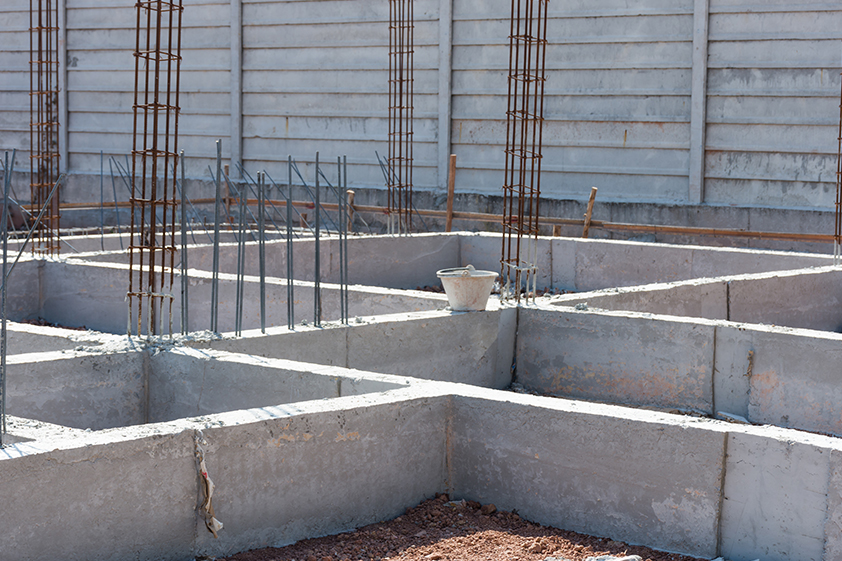
Foundations are deep structures required for any civil building construction work and it is an inevitable factor of building structure. These structures transfer the weight of the structural building and its own weight over the large area of soil in such a manner that the land does not exceed the load-bearing strength of its soils and the settlement of the total building structure stay within two tolerable limits.
RCC Foundation
RCC – Abbreviation for Reinforced Cement Concrete, RCC foundations or footings are a combination of traditional cement concrete with reinforcements (steel bar), which makes it a strong construction material.
With this combination, the compressive strength of both the concrete and steel, work together to resist many types of loading which hold the entire weight of a building. The shape of these foundations can vary, depending on the requirements of each structure.
Different types of RCC Foundation
There are several types of foundation used for an RCC structure in which steel is used as reinforcement, and it generally depends on factors such as the type of soil, type of building, and the type of loads on the building. Major types of RCC foundations are:
1. Spread foundation
2. Combined footing/foundation
3. Raft/Mat foundation
4. Piling method of foundation
Significances of RCC Foundation
1. Strength
RCC Foundation has very good strength in tension and compression, which makes it the most desired construction structure.
The strong bond between steel and concrete, prevention of corrosion of steel bars, thermal expansion properties of both concrete and steel, and its quality are the major factors on which the strength of RCC generally depends.
2. Economical
The wide availability of concrete constituents and its low production cost makes concrete inexpensive. The long-lasting characteristics of reinforced concrete also help to significantly cut down the maintenance cost.
Other factors such as durability, resilience, energy efficiency, and low rebuilding costs also contribute to its economic viability.
3. Versatility
Fresh concrete in its liquid state is flowable which makes it adaptable to be molded or placed into various shapes or structures to create different and unique shapes, surfaces, and textures of varied sizes.
This adaptability makes it a desirable choice for different and versatile architectural requirements, especially in this modern age.
4. Durability
RCC structures are durable; provided they are designed and laid out properly. They are not affected by weather conditions such as heat, rainfall, and snow and can last up to 100 years.
The low permeability also empowers concrete to resist chemicals dissolved in water that may otherwise cause corrosion and deterioration, which also makes it ideal for underwater and submerged constructions.
5. Fire resistance
RCC structures are more fire-resistant than other commonly used construction materials such as steel and timber.
The basic properties of concrete prevent it from catching fire or burning, and it can withstand heat up to 6 hours, allowing enough time for carrying out rescue operations in case of fire.
6. Ductility
The steel reinforcement gives ductility to RCC structures and also enables them to show signs of distress through cracking and deflection in case of overloading, which significantly helps engineers to take preventive measures against concrete damages and collapse.
7. Seismic resistance
Properly designed RCC structures are extremely resistant to earthquakes and will only have ductile failure. RCC structures are ductile in nature, which is the primary requirement to design an earthquake-resistant structure.
8. Convenience
The raw materials required for the preparation of RCC are cost-effective and easily available. Compared to the use of steel in structure, RCC structures require less skilled labor for the erection of the structure, which makes it more convenient.
9. Reduced environmental impacts
There are several industrial wastes and by-products that can be recycled as a substitute for cement or aggregate or supplementary materials, which makes concrete production have reduced environmental impacts. It also improves the properties of concrete and thereby improves the quality of the structure.
10. Multi-mode application
Another major advantage of concrete is its ability to be used in different application methodologies as it can be hand-applied, poured, pumped, sprayed, grouted.
Applications of RCC
RCC structures or concrete are generally used for the construction of: Buildings, bridges, flyovers, water tanks, roads, floating structures, foundations, marine structures, chimneys, towers, retaining walls, etc…
Veegaland Homes, one of the most reliable builders in Kerala, designs and develops modern apartments ensuring convenience and safety at their peak. Our flats and apartments are constructed on earthquake-resistant RCC framed structures on deep pile foundations.
To learn more about our ongoing and upcoming apartment projects, please visit: https://www.veegaland.com
Recent Blog

Thrissur: Where Heritage Breathes and Modern Living Finds Its Rhythm
Some cities are known for their growth, others for their pace. Thrissur is known for how it makes you feel, evoking a deep sense of connection to its rich cultural heritage and vibrant community life. It is not some... Read More

Sustainable Living in Kochi: Why Apartments Designed for Earth Matters
As environmental concerns grow and urban temperatures rise, sustainable living is becoming a necessity in cities like Kochi. This World Earth Day, the focus is shifting towards eco-friendly apartments that reduce ... Read More

Ethical Building Practices: Why Transparency Builds Trust
Buying a home is one of the most important decisions a person makes, both emotionally and financially. In today’s real estate market, transparency plays a key role in building trust between developers and buyers... Read More

Beating the Heat: Designing Apartments for Kerala’s Changing Summers
Kochi’s summers are becoming increasingly intense, making indoor comfort a growing concern for apartment living. Traditional designs often struggle to manage rising heat, leading to higher energy use and discomfor... Read More